Mar 4, 2026
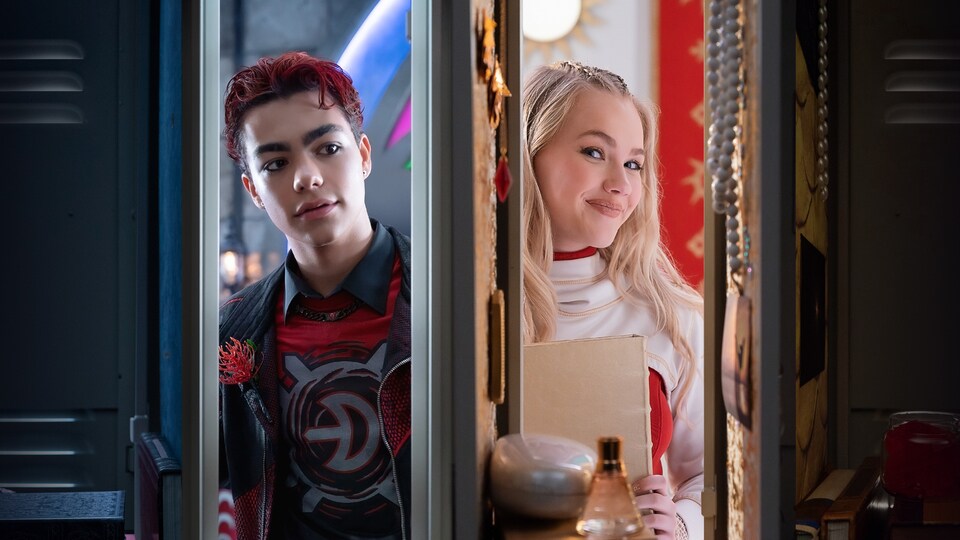
Last week, Disney stepped officially into the microdrama era.
On Disney+, the studio premiered Locker Diaries, an 11 episode vertical short form series (approximately 3 minutes per episode, 9:16 format). Familiar characters from established franchises appear through a school locker POV, reframed for mobile native viewing.
On the surface, this looks like experimentation. It isn’t. It’s a signal.
The early numbers were strong: 187K YouTube views in four days, 8,000+ upvotes, and #1 trending on Disney+.
But the real insight isn’t in the performance metrics, it’s in the marketing playbook. Disney pushed the series through existing Disney Channel accounts across YouTube, Instagram, and TikTok. Organic distribution. Established audience. Franchise recognition doing the heavy lifting. Comments turned off on YouTube. Weekly Saturday drops.
This is traditional television logic reframed vertically. It’s controlled. Brand protected. Familiar, and that’s where the contrast becomes interesting.
While Hollywood experiments, vertical native platforms are operating at scale.
Disney posted a TikTok. These platforms weaponised it.
This isn’t just content distribution, it’s user acquisition engineering. Testing, iterating, optimising creative daily. Applying gaming logic to narrative storytelling. And then comes the twist.
In January, TikTok launched PineDrama, a standalone microdrama app in the US and Brazil. But unlike the traditional microdrama platforms like ReelShort and GoodShort, PineDrama is completely free.
Launch titles reportedly reached over 100 million combined views. Users log in with their TikTok accounts, giving ByteDance an algorithmic advantage from day one.
Disney is distributing their new 9:16 content on TikTok whilst TikTok is building a platform that competes with Disney+ for the same Gen Z audience.
That’s not a marketing shift. That’s a structural one.
Chinese origin platforms are operating with budgets ranging from $25K–$600K per series, two week production cycles, AI integrated across scripting, dubbing, and marketing, and pay per episode monetisation modelled like mobile gaming.
China’s microdrama market reached approximately $7B in 2024, surpassing its domestic box office, with 830M+ viewers and hundreds of thousands of jobs tied to the ecosystem.
Now compare that to Disney’s approach: leveraging existing IP and cast, no visible paid user acquisition, weekly episode drops, and engagement play for daily Disney+ opens.
These aren’t just different strategies. They’re different operating systems.
The global microdrama market is forecast to reach $26B by 2030.
A 1,000 title vertical library deal recently closed across Europe and Latin America. Universities are formalising vertical production programmes. Entire ecosystems are emerging around short form narrative.
Traditional TV distributors are largely sitting this one out.
Disney has the IP, but TikTok has the algorithm and Chinese platforms have the monetisation engine. But the real opportunity lies in what comes next. At Sea Star Productions https://seastarfilm.com/, we see vertical not as the destination, but as the first layer.
Vertical native storytelling naturally lends itself to interactive branching, AR overlays, real time audience participation, and spatial and immersive extensions.
The next evolution isn’t about portrait versus landscape, it’s about passive versus participatory.
Vertical microdrama is already proving that audiences will commit in small, repeatable bursts to narrative worlds designed for their daily behaviour.
The companies that win won’t simply adapt TV for phones, they’ll design storytelling ecosystems built for how people actually consume media today and where immersive layers can sit on top tomorrow.
The format war isn’t vertical vs horizontal. It’s passive vs participatory and it’s only just beginning.
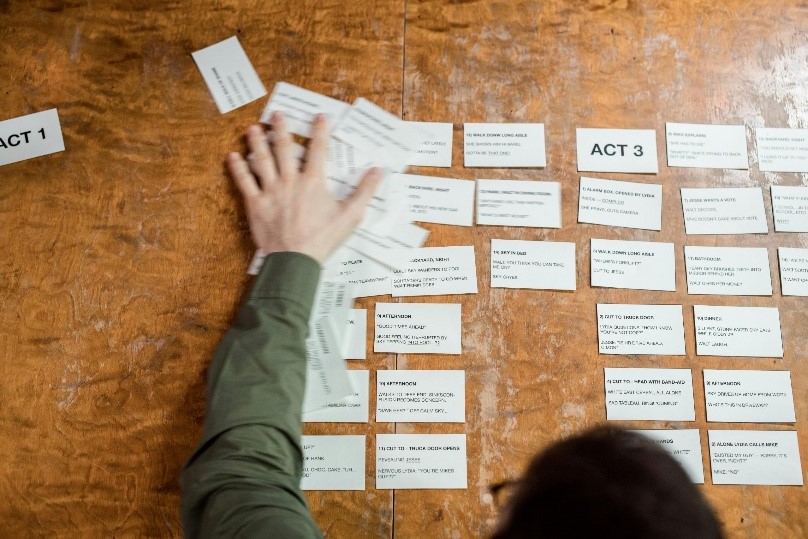
If you think writing a microdrama is the same as writing a movie or TV episode, it’s time to level up your game.
January 22, 2025
Not long ago, “appointment television” was the norm. Families gathered on the sofa to catch their favorite programme, from shows...
February 22, 2025

The rise of mobile-first viewing has transformed storytelling, and AI is now pushing the boundaries of vertical dramas.
March 22, 2025